
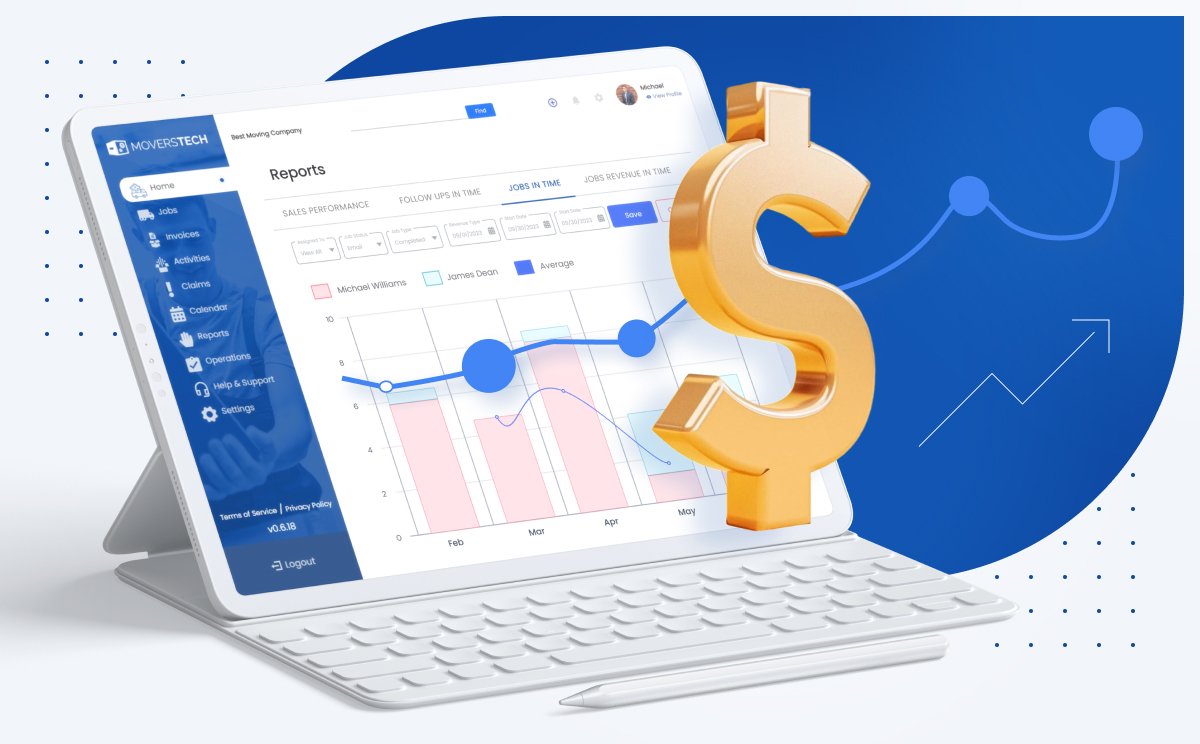
Moving pricing software replaces guesswork with rule-based automation. By connecting estimates, dispatch, payroll, and reporting, movers prevent underpricing, catch overtime risks early, and keep margins predictable before trucks are dispatched instead of fixing losses afterward.
Pricing problems usually do not show up in estimates. They show up later, in payroll and profit reports. That is why many moving companies start looking at moving pricing software once growth exposes gaps they can no longer control. Today, pricing no longer lives in spreadsheets or personal judgment alone. Instead, it runs inside connected systems like MoversTech CRM for moving companies, where estimates, dispatch, billing, and reporting share the same data. When pricing rules connect to real operations, automated moving pricing becomes consistent and predictable. As a result, movers stop fixing pricing mistakes after the job and start preventing them before a truck is dispatched.
What is moving pricing software?
Moving pricing software is the system movers use to calculate job prices based on defined logic. Rather than relying on spreadsheets, calculators, or memory, pricing lives inside the same workflow used to run the business. As a result, moving pricing software applies the same structure to every estimate, no matter who prepares it.
At a basic level, it replaces flat pricing with rules. Flat pricing assigns one number and hopes it fits. Rule-based pricing adjusts rates based on job details. This includes time, crew size, date, distance, and services. Because pricing rules for moving companies stay consistent, estimates match how jobs actually run.
Why manual pricing breaks as moving companies grow
Manual pricing often works when volume is low. However, cracks appear fast as schedules fill up. Different estimators start quoting different numbers for the same type of move. At the same time, peak season pressure forces quick decisions. That is when details get missed.
Accessorials like stairs, long carries, or elevators are skipped to keep quotes moving. Later, overtime shows up in payroll that was never priced in. Because moving pricing software is not involved, these gaps stay hidden until after the job closes. By then, correcting the price feels impossible, and margins suffer quietly.
How price automation actually works for movers
Price automation works by replacing memory with structure. Instead of relying on what an estimator remembers, moving pricing software uses rules that apply the same way every time. Because of this, pricing decisions stay consistent across the team.
These rules cover common variables. Date-based multipliers adjust rates for busy days. Time-based labor rules account for longer jobs. Location-based logic reflects travel and access limits. Together, these form the core of moving company price automation. As a result, automated moving pricing follows how jobs actually run. Pricing rules for moving companies no longer live in someone’s head. They live inside the system and guide every estimate.
The benefits of automated moving pricing software
Pricing problems usually appear too late. By the time they show up, the job is already complete, and margins are locked. Automated moving pricing software helps you:
- Prevent underpricing during peak season
- Avoid overtime surprises after payroll
- Stop missing elevator, stairs, and long carry charges
- Improve pricing accuracy with dispatch zone data
Prevent underpricing during peak season
Summer pricing often drifts because demand rises faster than control. When phones ring nonstop, estimators rush, and rates start to vary. Manual processes increase the risk of mistakes. In many industries, about 39 percent of manually handled invoices contain errors, which then require extra time and effort to correct. The same pattern appears when pricing relies on manual judgment during peak months.
Automated moving pricing applies peak season multipliers the moment a date triggers higher demand. Because the rule is already in place, every estimate reflects the same increase. At the same time, teams keep flexibility for special cases without changing every quote by hand. As a result, pricing stays aligned across the season, even when volume is at its highest.
Avoid overtime surprises after payroll
Overtime is rarely planned accurately during quoting. Estimates look clean, yet jobs stretch longer than expected. Without structure, those extra hours surface only after payroll is processed. That delay creates pricing gaps that are hard to explain.
Moving pricing software addresses this earlier. By analyzing how similar jobs ran in the past, the system flags overtime risk before the job is booked. This is a key benefit of moving to company price automation. Pricing reflects real execution patterns instead of best-case assumptions. As a result, overtime and strike pricing stop being surprises and become part of the estimate itself.
Stop missing elevator, stairs, and long carry charges
Accessorial charges are missed more often than base rates. This usually happens because estimators rush or rely on incomplete notes. Later, adding fees creates awkward conversations with customers.
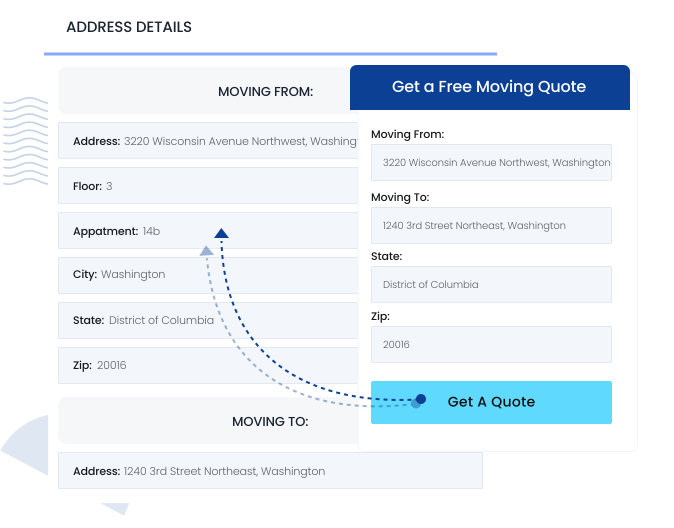
Moving pricing software removes that tension. Rules trigger elevator, stairs, and long carry fees the moment those details appear in the estimate. Because the logic applies every time, pricing stays consistent across the team. This also improves online moving estimates, since access details flow directly into pricing. As a result, automated moving pricing reduces missed charges and keeps final invoices aligned with what was quoted.
Improve pricing accuracy with dispatch zone data
Distance alone does not explain why some jobs always run long. Two moves with the same mileage can produce very different results. Traffic, building access, parking limits, and loading conditions all affect how a crew performs.
Moving pricing software handles this by pricing jobs based on dispatch zones. Instead of guessing, rates adjust using historical data from past moves in each area. This strengthens moving company price automation because pricing reflects how work actually runs. Over time, movers can see job margin by zone, average labor hours per area, overtime frequency on specific routes, and other financial KPIs for movers. As a result, pricing decisions improve without relying on intuition.
What to look for in moving pricing software
Choosing moving pricing software works best when you evaluate it against clear, practical criteria. Each point below should match how your operation actually runs:
- Rule flexibility – You should be able to update rates, surcharges, and logic without developer help. Pricing rules for moving companies must adjust as your services and costs change.
- Dispatch integration – Pricing needs to reflect crew availability, timing, and workload. Otherwise, estimates break once the job reaches dispatch.
- Profit visibility – You should clearly see how pricing affects margins, labor costs, and overtime before payroll exposes issues.
- Lead to invoice continuity – When you use lead tracking software for moving company, pricing stays consistent from the first inquiry through billing, without resets or manual fixes.
Use moving pricing software and keep pricing consistent across every job
Automation does not remove judgment from pricing. Instead, it removes inconsistency. When moving pricing software applies the same logic every time, estimates stop changing based on who answers the phone. That consistency matters because pricing problems usually appear after the job runs, not during the quote. Moving company price automation helps you address those risks earlier, before payroll exposes them. Automated moving pricing works best when it connects estimating, dispatch, execution, billing, and reporting in one flow. In the end, better pricing starts before the truck rolls, not after margins are already lost.
Frequently Asked Questions
What is moving pricing software used for?

It calculates estimates using predefined rules based on job details like crew size, time, distance, date, and services, ensuring every quote reflects how jobs actually run.
How does automated moving pricing improve profitability?
It prevents missed accessorials, applies peak-season rates automatically, flags overtime risks early, and aligns pricing with real execution data instead of assumptions.
Is pricing automation flexible for different move types?
Yes. Modern systems let movers adjust rules for residential, commercial, long-distance, or peak-season jobs without rebuilding estimates manually.
Does moving pricing software replace human judgment?
No. It removes inconsistency, not control. Estimators still make decisions, but within a structured system like MoversTech CRM that keeps pricing consistent across the team.
