

MoveitPro and MoversTech take different approaches to supporting moving company operations. By looking at estimating, dispatch, mobile use, support, reporting, and pricing models, this comparison helps moving companies assess which CRM philosophy better fits their current processes and future plans.
Choosing a CRM for a moving company is rarely about finding the “best” software on the market. In practice, it’s about finding a system that fits how your operation runs today and how much change you expect to manage as the business grows.
Most moving companies begin reevaluating their CRM after a season or two of friction. Workarounds start stacking up, reporting becomes harder than it should be, teams stop using the system consistently, or the software no longer reflects how jobs are sold, dispatched, and completed. At that point, the question isn’t whether the CRM technically works. It’s whether it still fits the way the company operates.

Why does this comparison exist
This article looks at that question through a comparison of MoveitPro and MoversTech.
To be transparent, we built MoversTech, but this is not a feature checklist or a sales pitch. Both platforms are used by moving companies today, and the purpose of this comparison is to show how each system approaches core moving workflows and where practical differences tend to appear in daily operations.
The sections that follow focus on those differences so you can decide which approach fits how your business actually runs.
Two different platform philosophies
When moving companies compare CRMs, the conversation usually starts with features. In practice, long-term satisfaction is shaped more by how the system expects the business to operate and how much flexibility it allows as that operation changes.
MoveitPro and MoversTech reflect two distinct philosophies that can both work well, depending on how a company prefers to run its day-to-day operations.
MoveitPro is built around a structured operational model. Estimating, dispatching, documentation, and internal roles are designed to follow a defined flow. This structure can be a strong fit for companies that want consistency across estimators, crews, and locations, and that prefer the system to clearly prescribe how work moves from lead to completed job.
MoversTech takes a fully flexible, configuration-driven approach. Instead of enforcing a single workflow, it allows companies to adjust roles, fields, automation, documents, and processes to match how the business already operates and how it plans to evolve. This approach tends to suit companies that expect their sales process, service mix, or internal structure to change over time and want the system to adapt with them.
The difference comes down to whether a company prefers to adapt its operation to the software or use software that adapts to its operation.

Why this matters
Most CRM frustration doesn’t come from missing features. It comes from the friction between how a system expects work to be done and how work actually happens inside the business. Understanding this difference early reduces the risk of switching platforms later.
Core functionality, viewed through daily operations
Most moving CRMs offer similar features on paper. The real differences show up during busy weeks, last-minute schedule changes, and when the business starts stretching beyond its original setup.
This section looks at how MoveitPro and MoversTech handle the same operational needs in practice.
Estimating and sales workflows
MoveitPro is strongly oriented toward in-home and on-site estimating. Its workflow emphasizes structured surveys, inventory capture, and standardized pricing logic designed for field-based estimators. This can be a good fit for companies that rely heavily on physical walkthroughs and want estimates to follow a consistent format regardless of who performs them.
MoversTech treats estimating as part of a broader, automated sales intake system. Leads can be captured from multiple sources, automatically assigned to sales staff, and converted into estimates using pre-filled customer data and online estimation tools. Quotes may originate from phone calls, web forms, virtual surveys, referrals, or repeat customers, with flexibility in pricing, services, and follow-up workflows.
The difference is less about accuracy and more about whether the sales process follows a fixed path or supports multiple entry points and automation.

Dispatching, crews, and day-of-move execution
MoveitPro emphasizes centralized dispatch control, with clear job assignments, predefined roles, and structured timelines. This can reduce ambiguity on busy days, particularly for operations with consistent crew structures and predictable schedules.
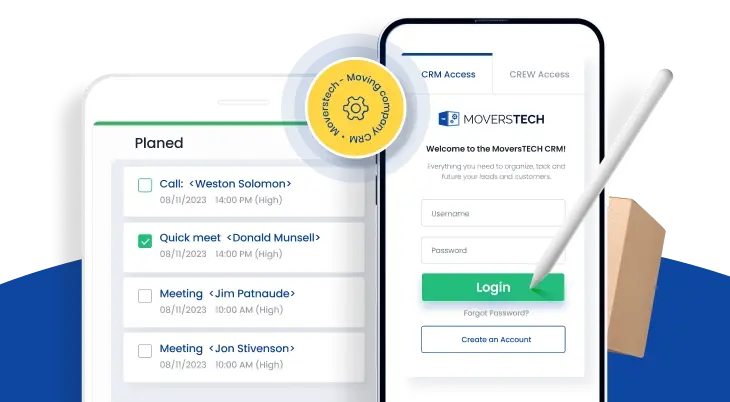
MoversTech allows dispatch logic to be adjusted as operations evolve. Movers and trucks can be assigned through a dedicated dispatch calendar, with crew members accessing job details through the Crew Access App and receiving automatic notifications about assignments and changes. Permissions and visibility can be tailored by role, location, or service type.
Here, the choice often comes down to whether the operation values strict structure or adaptive control when plans change.

Documents, payments, and compliance
MoveitPro focuses on standardized document flows, helping ensure estimates, contracts, bills of lading, invoices, and claims follow the same process across jobs. This can be especially useful for companies prioritizing consistency and compliance.
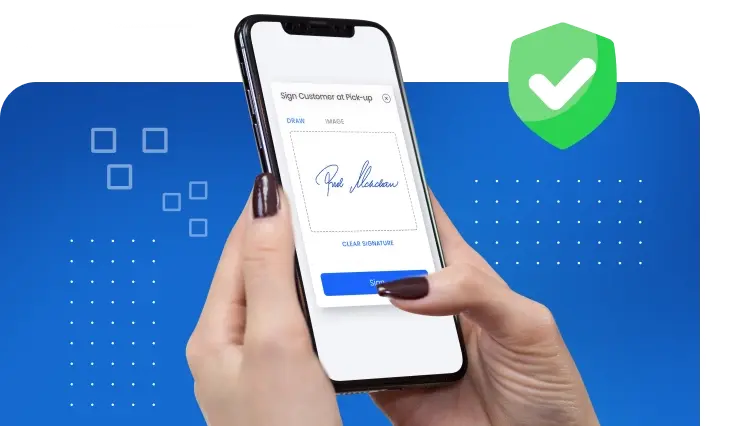
MoversTech supports fully digital document workflows, including customizable templates, eSignature, and Bills of Lading that can be prepared and signed from the office, on-site, or from a truck. Documents are stored centrally and remain accessible throughout the job lifecycle.
Both approaches aim to reduce errors. The difference is how much variation the business wants to allow in document handling.
Storage, recurring jobs, and long-term accounts
MoveitPro treats storage as a core operational function, with built-in inventory tracking and recurring billing structures that suit companies with established warehouse operations.
MoversTech manages storage and recurring work as part of a broader customer lifecycle, alongside moves, repeat jobs, and long-term accounts. This approach fits companies that view storage as one component of ongoing customer relationships rather than a separate operational silo.
Reporting and owner visibility
MoveitPro emphasizes predefined reports that provide consistent operational metrics with minimal setup. This can simplify oversight for owners who want quick answers without customization.
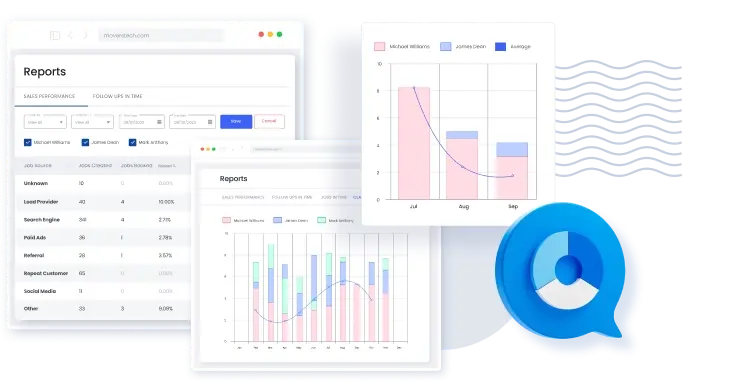
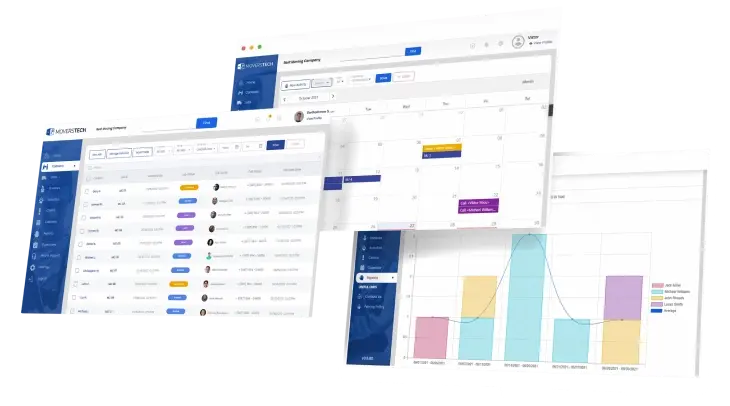
MoversTech allows reporting to evolve with the business. Owners can customize reports, apply filters by time frame or service type, and monitor sales performance, operational efficiency, and financial health in real time.
The difference becomes clear when an owner asks a new question of the business and needs the system to answer it without relying on manual workarounds.
Why this matters
CRMs rarely fail during demos. They succeed or struggle during peak season, staff turnover, service expansion, and unexpected change. How a platform handles daily operations determines whether it supports the business or gradually becomes another source of friction.
Mobile use and field experience
For moving companies, mobile access is not a secondary feature. Estimators, drivers, and crews rely on it daily, often in situations where timing, connectivity, and clarity matter more than interface polish.
This is one area where the practical differences between MoveitPro and MoversTech tend to surface quickly.
Estimator-first vs crew-first mobile focus
MoveitPro’s mobile experience is primarily estimator-driven. It is designed around in-home and on-site surveys, inventory capture, and building structured estimates in the field. This suits companies that rely heavily on physical walkthroughs and want a consistent estimating process regardless of which estimator is assigned.
MoversTech places more emphasis on crew access and job execution. Mobile access focuses on viewing job details, managing assignments, collecting signatures, communicating updates, and tracking progress during the move. Estimating is still part of the system, but it sits within a broader workflow that connects sales, dispatch, and field execution.
The difference is less about capability and more about which role the mobile experience is designed to support first.
Connectivity assumptions in real-world conditions
MoveitPro is designed with the assumption that estimators may not always have reliable connectivity. Its field workflows can continue when internet access is limited and sync later, which can be valuable for rural jobs, dense urban buildings, or older properties with poor reception.
MoversTech generally assumes consistent connectivity, with mobile access designed to keep crews and office staff aligned in real time. This works well for metro-based operations and teams that prioritize live visibility during active jobs.
Local vs long-distance realities
For local moves, speed and simplicity tend to matter most. Crews need quick access to job details, contacts, and documentation without unnecessary steps.
For long-distance or multi-day moves, visibility and coordination become more important. Office teams need to track progress, communicate updates, and manage handoffs across longer timelines.
Some platforms naturally align better with one of these scenarios than the other. Understanding which type of work dominates your operation helps clarify which mobile experience will feel supportive rather than restrictive.
Why this matters
Mobile limitations rarely show up in demos. They appear during rushed estimates, delayed arrivals, or jobs that change mid-move. A mobile setup that reflects how your teams actually work in the field can reduce friction long after implementation.
Support models and onboarding experience
Support tends to matter most after a system is live, when workflows need adjustment, staff changes occur, or something breaks during a busy week.
MoveitPro approaches onboarding as a transition into a defined system. Training is primarily focused on helping teams learn the platform’s established workflows and apply them consistently. This can be a strong fit for companies that want clarity early and prefer the system to guide how tasks are handled.
MoveitPro also offers optional outsourced services, including call center support. This appeals to companies that prefer to offload parts of their sales or intake process rather than manage everything internally.
MoversTech treats onboarding as a structured, guided setup process. New customers go through onboarding sessions with a senior product manager, supported by multiple training sessions and a CRM that is preloaded with contracts, templates, and automations. The focus is on configuring workflows, roles, documents, and automation to reflect how the business actually operates.
Day-to-day support reflects these differences. MoveitPro leans toward centralized support and bundled services, while MoversTech emphasizes direct access to real human support, ongoing onboarding follow-ups, and defined response-time expectations through priority and premium support tiers.
The right fit depends on whether a company prefers support that helps it operate within a predefined system or support that helps the system adapt as operations change over time.
Pricing, plans, and long-term flexibility
CRM pricing is rarely just about a monthly fee. It’s about commitment, upgrade paths, and how easily the system can adapt as the business changes.
MoveitPro is typically positioned as a more all-in-one operational platform, with pricing that reflects bundled functionality and optional add-on services. This can make sense for companies that want a broad system in place and expect their workflows and operating model to remain relatively stable over time.
MoversTech uses a plan-based, monthly model built around predictability and control. Companies choose a plan based on how they operate, with the ability to move between plans as needs change, without long-term contracts or forced upgrades. This structure aligns well with movers who expect to refine processes, add services, or adjust team structures as the business evolves.
For owners, the key question isn’t which option is cheaper. It’s the pricing model that best supports the level of change the business anticipates over the next few years.
Which type of moving company tends to prefer each platform
While every operation is different, certain patterns tend to emerge based on how companies sell, schedule, and manage work.
When MoveitPro is often a strong fit
- Companies that rely heavily on in-home estimating as their primary sales model
- Operations that value standardized workflows across estimators, crews, and locations
- Movers looking for a single, structured system with optional outsourced support
- Businesses with established processes that are not expected to change frequently
When MoversTech is often a strong fit
- Companies handling a mix of local, long-distance, and storage work
- Owners who want direct control over workflows, roles, documents, and automation
- Teams expecting growth, restructuring, or operational change
- Movers who prefer predictable, monthly flexibility rather than long-term commitments
When neither platform may be ideal
- Operations looking only for lightweight or temporary tools
- Companies seeking fully custom-built internal software rather than a CRM platform
- Teams unwilling to invest time in proper setup, onboarding, or adoption
Making a confident CRM decision
Choosing between MoversTech and MoveitPro isn’t about finding a universal winner. It’s about understanding how each platform approaches real operational challenges and deciding which philosophy aligns best with how your business runs.
Both systems are used successfully by moving companies today. The right choice depends on how structured you want your workflows to be, how much flexibility you expect to need, and how you prefer to manage growth and change over time.
If you’re reevaluating your CRM, the most valuable step isn’t comparing feature lists. It’s mapping your current operation and future plans against the assumptions built into the software.
That clarity leads to more confident decisions and reduces the likelihood of switching systems again down the road.
Frequently Asked Questions
What are the main differences between MoveitPro and MoversTech?

MoveitPro is built around structured, predefined workflows, while MoversTech focuses on flexibility and configuration to match how a moving company operates and evolves over time.
How does MoveitPro compare to MoversTech for daily moving operations?
MoveitPro emphasizes consistency and standardized processes, whereas MoversTech allows teams to adjust sales, dispatch, and job workflows as operational needs change.
Which CRM is more flexible, MoveitPro or MoversTech?
MoversTech generally offers more flexibility through customizable roles, workflows, and automation, while MoveitPro prioritizes stability through a more fixed operational structure.
How do MoveitPro and MoversTech differ in pricing and long-term commitment?
MoveitPro typically follows a more bundled, long-term platform model, while MoversTech uses plan-based monthly pricing designed to support changes without long-term contracts.
Reviewed by: Sam Hathaway
