

Rigid moving contracts often create friction as operations grow and jobs evolve. When inventory, services, or schedules change, flexible agreements supported by CRM-driven document workflows help movers update terms quickly and keep the job moving without administrative delays.
Moving contracts exist to protect both the mover and the customer. They define the scope of work, pricing, responsibilities, and delivery expectations. When written clearly, they reduce disputes and keep jobs organized. However, as moving companies grow and operations become more complex, rigid contracts can start creating friction instead of preventing it. Jobs evolve, services expand, and customer needs shift during the process. Contracts that cannot adapt to those changes often slow down the operation. Understanding where these problems appear helps movers build agreements that support real jobs rather than complicate them.
Why long contracts feel safe at first
For many moving companies, standardized contracts feel like a sign of professionalism and stability. A fixed document simplifies the sales process and gives the office team a clear structure to follow.
When a company operates with only a few crews and a limited number of services, these contracts usually work well. Estimates follow predictable patterns, jobs stay relatively simple, and the scope of work rarely changes once the agreement is signed.
At this stage, having a fixed contract seems efficient. The same template applies to most jobs, and approvals move quickly.
As the business grows, however, the situation changes.

What actually changes when a moving company grows
Growth introduces variety. More trucks, more crews, and a wider range of services create situations that early contracts were never designed to handle.
Moving companies begin offering additional services such as:
- packing and unpacking
- storage in transit
- long-distance relocation
- commercial moves
- specialty item handling
Each service introduces new variables that can affect the final job.
Customers also change their plans frequently. Inventory lists grow, delivery windows move, and additional services appear after the estimate has already been approved.
When these changes happen, rigid contracts become harder to manage.
Where rigid moving contracts start creating problems
Contracts are meant to create clarity, but when they cannot adjust to real situations, they can slow down the workflow.
Some of the most common problems include:
Changes in inventory
Customers often add items after the estimate. If the contract cannot easily reflect those changes, the office must issue amendments or manual paperwork.
Additional services during the move
Packing, disassembly, or storage may be requested after the agreement is signed. When the contract structure is too rigid, adding these services becomes complicated.
Schedule adjustments
Pickup or delivery dates may change due to building access, weather, or customer availability. Contracts that do not allow flexible scheduling terms can create confusion.
Change orders during busy periods
During peak season, the office may not have time to chase signatures for every small adjustment. Manual updates quickly become a bottleneck.
None of these issues is unusual in the moving industry. They happen every day. The problem appears when the contract system cannot keep up with them.

The hidden problem: paperwork disconnected from the job
In many moving companies, contracts still live outside the operational workflow.
They may exist as:
- PDF documents stored separately
- paper files signed in person
- email attachments that must be tracked manually
When the agreement is disconnected from the job itself, updates become difficult. The office must search for documents, verify terms, and confirm signatures before moving forward.
As job volume increases, this process slows down the entire operation.
Why digital contracts change the process
Digital contract management solves many of these problems by connecting agreements directly to the job record.
Instead of preparing documents manually, contracts can be generated directly from estimate data. When inventory changes or services are added, the document updates automatically.
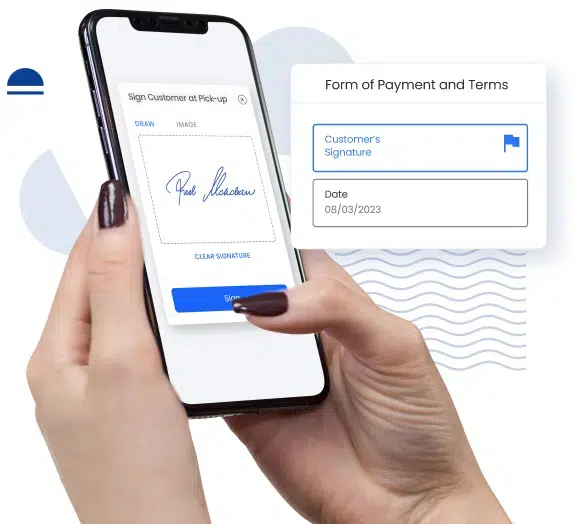
Customers can review and sign agreements electronically, which removes delays caused by printing, scanning, or chasing signatures.
This approach does not remove the contract. It simply allows the agreement to adapt to real moving scenarios.
How modern moving CRMs handle contracts
Modern moving company software typically manages contracts as part of the operational workflow.
Key capabilities usually include:
- generating contracts from estimates
- built-in digital signatures
- automatic document storage within the job record
- editable templates for different move types
- quick change orders when job details evolve
These features ensure the contract always reflects the current job details. Dispatch, sales, and operations teams can work from the same information without searching through separate files.
Growth requires adaptable agreements
Contracts remain one of the most important documents in the moving industry. They establish expectations, protect both sides, and reduce disputes. However, as moving companies grow, rigid agreements can become harder to manage. Jobs evolve quickly, services expand, and customer needs change during the process.
The most effective contracts are not necessarily the longest or most detailed. They are the ones who stay connected to daily operations and adapt as the job evolves. When contracts remain flexible and integrated into the workflow, they support growth instead of slowing it down.
Frequently Asked Questions
Why do moving contracts need to be flexible?

Moving jobs often change after the initial estimate. Flexible contracts allow companies to adjust inventory, services, or schedules without creating new paperwork each time.
What problems do rigid moving contracts create?
Rigid agreements make it difficult to update job details, add services, or handle schedule changes, which can slow down operations and increase administrative work.
How do digital contracts help moving companies?
Digital contracts allow movers to generate documents directly from estimates, collect signatures electronically, and store agreements within the job record for easy access.
Can a CRM manage moving contracts automatically?
Many modern moving CRMs generate contracts from job data, allow electronic signatures, and update documents automatically when job details change.
