
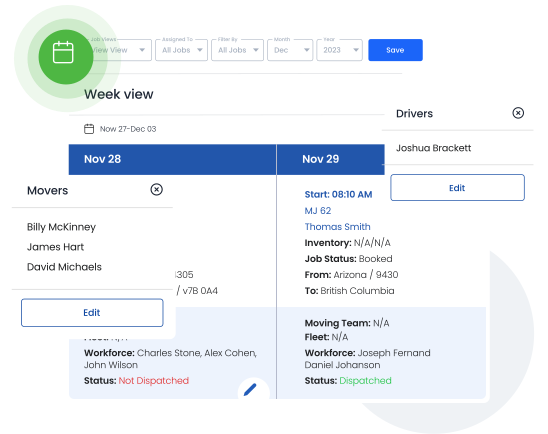
Dispatching fails first as moving companies grow because informal scheduling cannot scale. More crews, overlapping jobs, and multi-day moves expose gaps in visibility and coordination. Treating dispatch as an operational system, not an admin task, prevents breakdowns.
Growth feels exciting until daily operations start slowing everything down. That shift often shows up first in scheduling and coordination. This is why dispatching breaks first as moving companies grow. As volume increases, dispatching turns into the main pressure point across the business. It connects crews, trucks, timing, payroll, and customer communication, so strain shows up there first. Informal processes stop working once jobs overlap and margins tighten. This is not about effort or skill. It is about structure falling behind growth. Companies that use systems like MoversTech CRM often see these issues earlier and treat dispatching as an operational system, not an admin task.
Why does dispatching work early and then quietly fails
In the early stages of a moving company, dispatching feels reliable because the operation runs on familiarity rather than structure. Teams are small, routes are predictable, and dispatchers make decisions based on memory and past experience. This environment hides risk. Problems get solved quickly because everyone knows each other and understands the flow without documentation or shared systems.
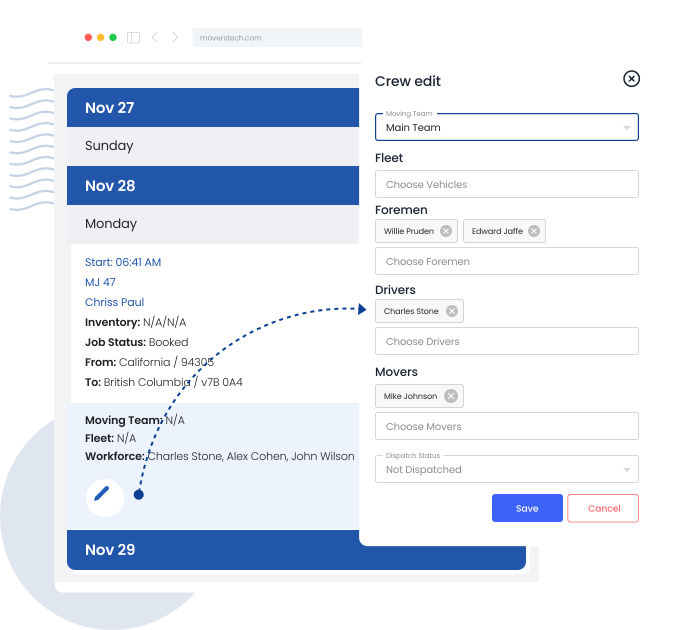
However, as the business grows, that informal knowledge stops scaling, which explains why dispatching breaks first as moving companies grow. More crews, more trucks, and overlapping jobs reduce the margin for error. Decisions must happen faster and with less context. Growth itself does not break dispatching. Scale simply exposes that dispatching was never built as a system in the first place.
Top reasons why dispatching breaks first as moving companies grow
As moving companies scale, pressure builds where coordination, timing, and accountability intersect. Dispatching breaks first as moving companies grow because:
- Local moves overload dispatch with daily volume
- Interstate moves increase uncertainty and coordination pressure
- Multi-day moves expose gaps in continuity
- Growth spreads dispatch failures across the business
- Manual dispatching hides the real problem
- Dispatching must evolve from scheduling to a system
Local moves overload dispatch with daily volume
Local moves increase volume faster than any other service line, which is one of the main reasons why dispatching breaks first as moving companies grow. As more jobs stack into the same day, crews start handling multiple moves, arrival windows tighten, and small delays spread across the schedule. Traffic, parking issues, or a job running long can throw off several moves at once. Dispatchers often lack real-time visibility into where crews are and how jobs are progressing. Adjustments happen through calls and texts instead of a shared view, which turns dispatching into a constant reaction instead of active control. When you learn how to handle dispatch with moving software, you will see job status, crew progress, and timing in one place, even as volume removes the margin for guesswork.
Interstate moves increase uncertainty and coordination pressure
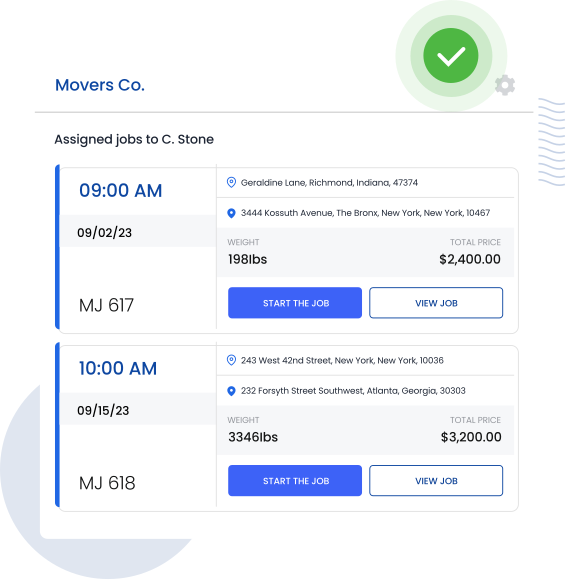
Interstate work increases complexity in ways local moves do not. Jobs stretch across days or weeks, and timelines depend on factors outside direct control. Compliance requirements add pressure, while customers expect frequent and accurate updates. Dispatching often struggles because job details live in emails, notes, or separate tools. There is no shared source of truth. Dispatchers hesitate when giving ETAs because information changes and context is fragmented. Without continuity across days, dispatching becomes static planning instead of ongoing coordination, which exposes its limits as the operation scales.
Multi-day moves expose gaps in continuity
Multi-day moves place sustained pressure on operations. These jobs depend on keeping the same crews aligned across days, tracking labor accurately, and preserving job context from start to finish. When dispatching is built around single-day schedules, that continuity breaks down. Each day starts to feel like a new job, even though the work is ongoing. Details get passed verbally or noted informally, which increases the risk of missed information. As context fades, dispatching shifts away from coordination and turns into correction, exposing how limited a schedule-only approach becomes as operations scale.
Growth spreads dispatch failures across the business
As a moving company expands, dispatching problems stop staying contained, which further explains why dispatching breaks first as moving companies grow. Breakdowns in dispatch quickly affect payroll accuracy, crew morale, and job profitability. They affect customer communication too, which is an important pressure point since around 90% of customers expect fast responses when they have a question. These issues often appear disconnected, but they share the same source. Dispatching is the connection point between what sales promises and what operations can actually deliver. When dispatch loses clarity, confidence erodes on both sides, and leadership starts reacting to symptoms instead of addressing the system behind them.
Manual dispatching hides the real problem
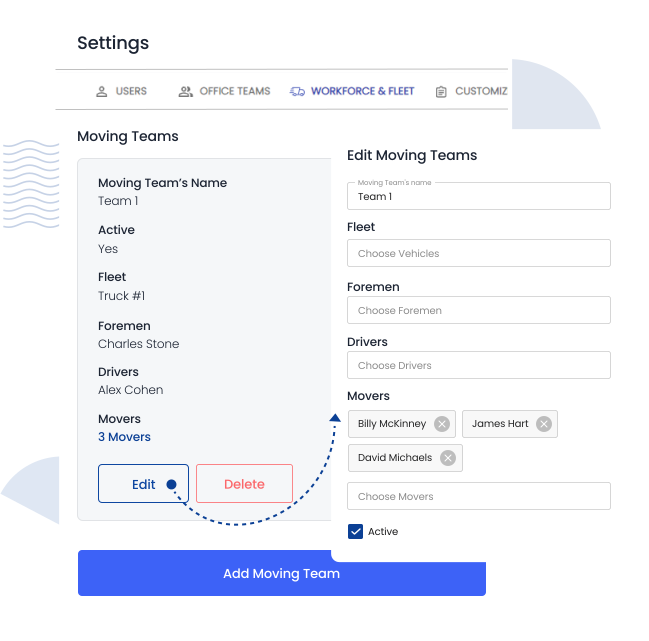
Manual and fragmented dispatching creates problems that surface slowly, which is another reason why dispatching breaks first as moving companies grow. Owners and GMs often notice overtime spikes, dispatcher fatigue, and inconsistent customer experiences without seeing the common cause. Dispatchers spend their days chasing updates, confirming details, and fixing handoffs instead of managing the operation. Information lives in texts, calls, and personal notes, so nothing stays aligned for long. As pressure builds, people work harder, but outcomes get worse. Most companies do not realize that dispatching is broken. They only see the downstream effects showing up across payroll, service quality, and daily stress.
Dispatching must evolve from scheduling to a system
As operations become more complex, dispatching has to change. A basic schedule cannot support work that spans local, interstate, and multi-day moves at the same time. Dispatching at scale requires a single operational view where jobs, crews, and timelines stay connected as conditions shift throughout the day. Real-time updates reduce the need for constant calls and help teams adjust before small issues spread. You can use dispatch software for moving companies to see job status, crew availability, and timing in one place, which allows dispatchers to manage work instead of reacting to it.
Dispatching breaks first because it touches everything
The reason why dispatching breaks first as moving companies grow is that it connects every part of the operation. When dispatch loses clarity, payroll issues appear, crews lose trust in schedules, customer updates become inconsistent, and job margins start to blur. These problems often look unrelated at first, but they share the same root. Dispatching is not an admin task. It is an operational control system. Growth exposes weak systems long before it exposes weak people. Repeating issues like overtime surprises, missed handoffs, and unclear job ownership are signals that the structure no longer fits the operation. This is why you need customizable CRM. It allows dispatching to support growth without forcing teams to change how they already work.
Frequently Asked Questions
Why does dispatching break first as moving companies grow?

Dispatching breaks first because it connects crews, trucks, timing, payroll, and customer communication. As job volume and complexity increase, informal scheduling cannot scale, exposing coordination gaps and system weaknesses.
What are the early signs of dispatching problems in a moving company?
Common signs include frequent schedule changes, overtime surprises, missed handoffs between crews, inconsistent customer updates, and dispatchers spending most of their time reacting instead of planning.
How do local and interstate moves affect dispatching differently?
Local moves overload dispatch with high daily volume and tight timing, while interstate and multi-day moves increase uncertainty, continuity demands, and communication pressure across days and teams.
How can moving companies fix dispatching issues as they scale?
Dispatching improves when companies treat it as an operational system. Using moving-specific dispatch software with real-time visibility helps align crews, jobs, and timelines as the business grows.
