
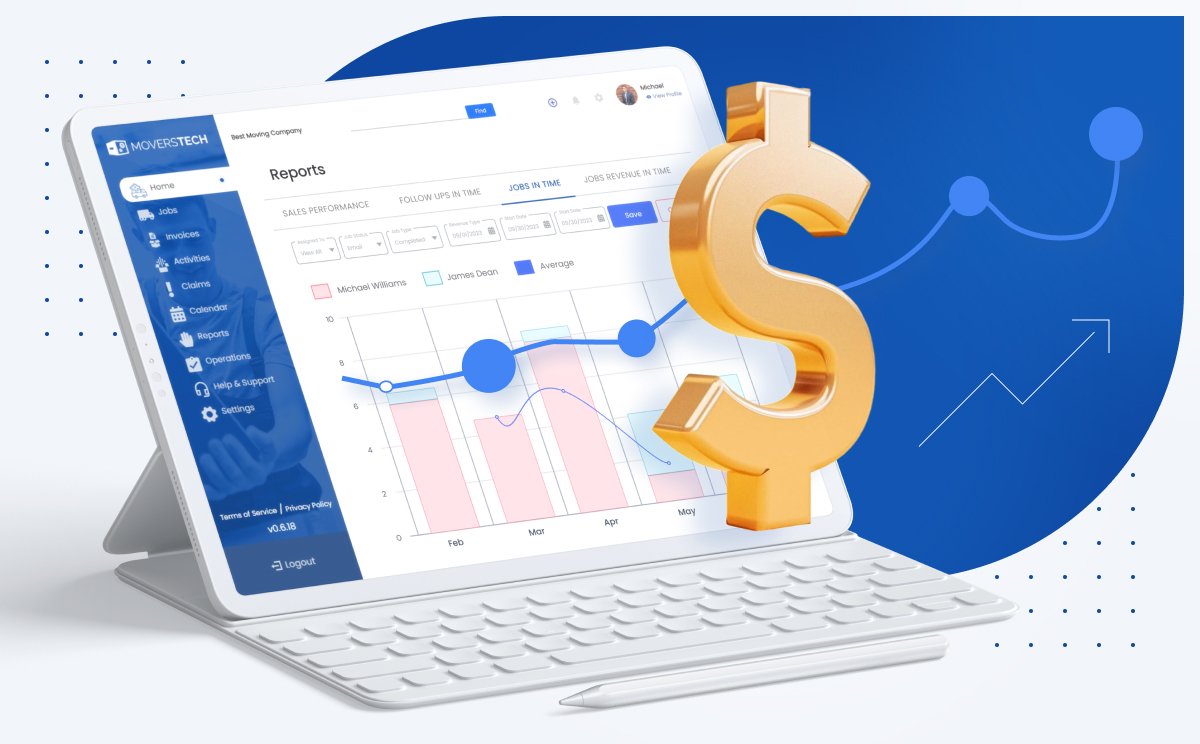
Fuel costs quietly erode long-distance moving profits when job-level visibility is missing. Without tracking fuel impact per move, high-revenue jobs can hide losses. Clear cost vs revenue reporting helps movers spot weak routes, adjust pricing, and protect margins early.
Fuel costs do not hurt your business in loud or obvious ways. They drain profit quietly, while everything still looks fine on the surface.
Most moving company owners already know fuel is expensive. That part is not new. The real problem is how fuel costs quietly kill long-distance move profit without showing clear warning signs. Long-distance jobs hide margin loss better than local moves. Revenue looks strong. Crews stay busy. Trucks keep rolling. Meanwhile, small fuel overruns chip away at profit one move at a time. This is where better operational visibility becomes critical. When fuel impact stays invisible, decisions rely on guesses instead of facts. That is when profit erosion becomes normal instead of noticeable.
Top reasons why fuel costs quietly kill long-distance move profit
Fuel costs do not hurt profit in obvious ways. They slip through daily decisions and lack visibility. These reasons show how fuel margin erosion occurs over time:
- Fuel price increases happen gradually, not all at once
- Long-distance miles increase the cost of every fuel miscalculation
- Absorbing fuel costs slowly erodes margins over time
- Flat pricing ignores how unstable fuel costs really are
- Fuel costs are not tracked at the job level
- High revenue moves hide low or negative profit
- Unprofitable routes keep repeating without being flagged
Fuel price increases happen gradually, not all at once
Fuel prices rarely jump overnight. They rise in small steps. Each increase feels minor on its own, so it is easy to ignore. But long-distance moves magnify every extra dollar spent at the pump. A few cents more per mile does not seem dangerous until you multiply it by hundreds or thousands of miles. That is how a move that looked profitable on paper slowly turns into a break-even job or worse. This is exactly how unseen cost leakage occurs without anyone noticing right away.

Long-distance miles increase the cost of every fuel miscalculation
Long-distance moves leave less room for error. More miles mean every fuel miscalculation grows larger. Deadhead miles often get underestimated or ignored during quoting. Add traffic delays, detours, weather issues, or last-minute route changes, and fuel use climbs fast. These costs rarely show up where owners expect them. One underpriced long-distance move can erase the profit from several local jobs.
Absorbing fuel costs slowly erodes margins over time
Absorbing fuel costs feels like the easy choice. It avoids tough pricing talks and keeps customers happy in the moment. The problem is what happens next. Over time, the business starts accepting smaller margins as normal. Owners usually notice the damage months later, not right away. By then, the pattern is set. Repeating this decision turns fuel volatility into permanent loss. This is how fuel costs quietly kill long-distance move profit through habits that seem harmless at first.

Flat pricing ignores how unstable fuel costs really are
Flat pricing works only when costs stay predictable. Fuel never does. Prices change often, especially on long-distance routes. When fuel rises, but pricing stays the same, margin shrinks quietly. Nothing breaks, jobs are still booked, and revenue still looks fine. This makes the problem harder to spot. Over time,a quiet margin loss happens because pricing assumptions never catch up to real operating costs. Flat pricing is only safe when costs stay visible and reviewed often.
Fuel costs are not tracked at the job level
Fuel usually gets logged as a general expense. It is not tied to individual jobs. Profit gets reviewed in totals, not move by move. Because of that, weak routes hide inside strong months. Route performance rarely gets compared across similar long-distance jobs. Without that visibility, pricing decisions depend on instinct and past habits. This drains profit while owners believe results are holding steady.
High revenue moves hide low or negative profit
A move can bring in strong revenue and still lose money. Long-distance jobs often look successful because the top-line number feels reassuring. Fuel tells a different story. It eats into the margin quietly while revenue stays visible. This is how a job can end with a negative profit margin, even when sales look strong. Owners celebrate booked moves and full schedules without seeing the true net result. That false signal leads to pricing decisions that feel safe but are not. Over time, fuel costs quietly kill long-distance move profit while the business believes it is performing well.
Unprofitable routes keep repeating without being flagged
When fuel impact stays hidden, the same mistakes repeat. Underpriced routes keep getting booked because nothing flags them as weak. Sales teams continue quoting based on old assumptions that no longer match real costs. Operations teams feel pressure to perform without knowing why margins feel tighter. As volume grows, losses grow with it.
What changes when you can see cost vs revenue per move
Everything shifts when each move shows its full numbers. Cost and revenue stop blending together. Underperforming routes become easy to spot. Pricing changes are based on facts, not gut feelings. Fuel stops feeling random and starts behaving like a controllable expense. This is where hidden fuel drag happens less often, because nothing stays hidden. Tools that let you get moving company reports make these gaps visible before they turn into long-term damage.
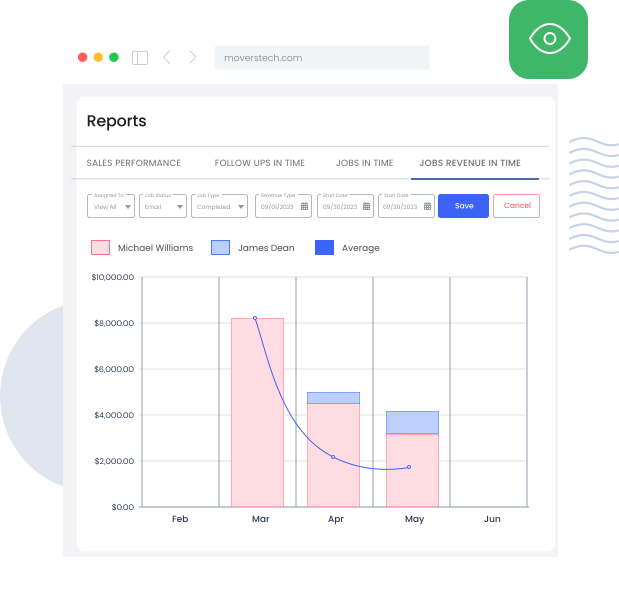
Identifying routes that quietly bleed margin
Some routes stay busy but never perform well. They look healthy because trucks keep moving, yet fuel overruns show up again and again. When you can see this clearly, the issue stops being a mystery. It becomes a pricing or routing problem that can be fixed. For example, adjusting how crews are assigned or how deadhead miles are planned during dispatch can reduce fuel waste. This is one of the most important moving company dispatch tips. Without this visibility, fuel costs kill profit while the same routes keep repeating.
Profit does not disappear. It gets missed
Fuel costs do not destroy profit on their own. The real damage happens when no one sees the impact clearly. When costs stay hidden, fuel costs quietly kill long-distance move profit without setting off alarms. Long-distance movers who track each job properly catch margin loss faster and fix it sooner. The goal is not to charge more by default. The goal is seeing clearly, adjusting early, and protecting what you already earn. As the industry shifts toward better data and smarter decisions, many moving trends point to visibility as the difference between growing revenue and keeping profit.
Frequently Asked Questions
Why do long-distance moves lose profit even when revenue looks strong?

Because fuel, deadhead miles, and route inefficiencies are rarely tracked per job. High revenue can mask rising fuel costs, allowing margin loss to stay hidden inside busy schedules.
Why is fuel cost harder to control on long-distance moves than local jobs?
Long-distance routes amplify small fuel miscalculations. Traffic, detours, weather, and deadhead miles compound costs, leaving far less room for error than shorter local moves.
Why don’t most moving companies notice fuel-related margin loss early?
Fuel is usually logged as a general expense, not tied to individual moves. Without job-level reporting, underperforming routes blend into overall revenue and avoid scrutiny.
How can fuel costs be managed more effectively on long-distance moves?
Fuel becomes manageable when it is tracked per move and reviewed against revenue. Seeing fuel impact at the job level allows movers to adjust pricing, routing, and dispatch decisions before margins erode.
