
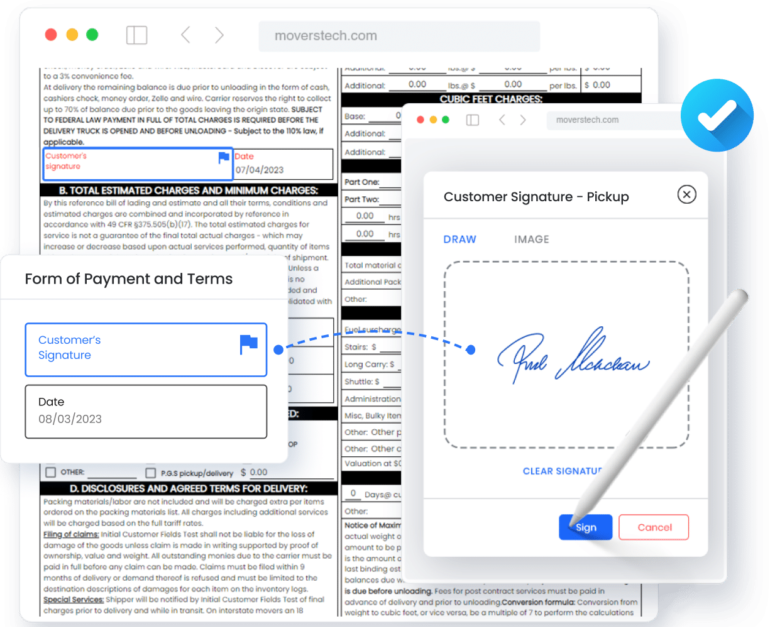
Digital Bills of Lading provide verified signatures, precise timestamps, and real-time updates, while paper forms rely on handwritten notes that create gaps, delays, and missed charges. Digital systems deliver stronger compliance, faster claims handling, and accurate billing, while paper increases risk and lost revenue.
When a customer challenges your paperwork, you either have proof or you have a problem. This is what we see when we test digital vs. paper BoLs. Paper documents leave gaps that create delays, disputes, and lost revenue. In contrast, modern moving company software records every action, from signatures to timestamps, in a clear and verifiable way. This turns your Bill of Lading into a reliable record that protects your operations, your revenue, and your compliance on every move.
The “he said, she said” nightmare
Paper BoLs fall apart the moment a dispute begins because they rely on unclear notes and weak proof. A customer claims a scratched mahogany desk was not listed as damaged. Your driver holds a coffee-stained form with a rushed signature and a vague note. The customer says they never agreed to pre-existing damage. At that point, the discussion turns into opinion versus opinion, not facts.

In a legal situation, messy paperwork creates doubt, and doubt works against you. Handwritten edits, unclear wording, and missing context make it harder to defend your position. When records are not precise and verifiable, even a small issue can turn into a costly claim or lost revenue. This is why you need to create moving company documents digitally. It will keep records clear, consistent, and easy to verify.
Digital vs. paper BoLs: The main differences
The differences between digital and paper BoLs is clear when you look at how each approach handles key parts of the move. These are the main areas where we see the gap between them:
- Compliance and timing
- Accessibility and real-time updates
- Signature verification and fraud protection
- Revenue tracking and missed charges
- Document retrieval and claims handling
Compliance and timing
Paper BoLs rely on handwritten dates and manual delivery, while digital systems record exact timestamps that prove compliance without delay. For long-distance moves, FMCSA requires the Bill of Lading to be signed and dated at least three days before loading, which sets strict timing requirements for every move. Paper slows the process because teams must mail documents and chase signatures, which increases the risk of missing that deadline.
With a CRM, your team sends, tracks, and signs documents with a precise time record. The system logs every action, which gives you clear proof that you met the requirement. A handwritten date on paper cannot provide that level of certainty if timing is ever questioned.
Accessibility and real-time updates
Paper BoLs depend on a single physical document that can be lost or damaged, while digital systems keep one shared version updated in real time. When inventory changes on-site, paper forms are often edited by hand, which leads to unclear notes and disputes later. Once that document is compromised, the source of truth becomes unreliable.
A digital system removes that risk by syncing updates instantly between the driver and the office. The moment an item or price changes, both sides see the same information without delay. Pricing, inventory, and notes stay aligned, which ensures the final bill reflects what actually happened during the move.
Signature verification and fraud protection
When a signature is questioned, paper BoLs offer very little proof beyond a name on a page, while digital systems provide verifiable identity data tied to the signing event. This difference between digital and paper BoLs becomes obvious the moment a customer claims a signature is not theirs. A handwritten signature can be denied, and there is often no reliable way to confirm who actually signed the document.
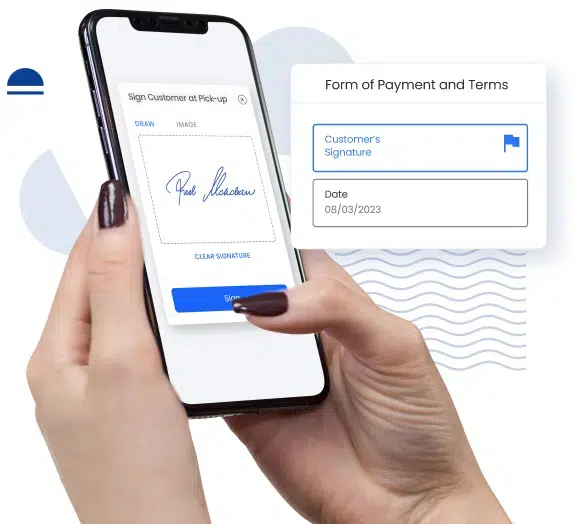
A digital system captures the IP address, device details, and GPS location at the exact moment of signing. This creates a clear record of identity and location connected to the document. This is one of the most valuable benefits of digital Bill of Lading because it gives you verifiable proof instead of relying on a signature alone when a dispute or chargeback occurs.
Revenue tracking and missed charges
Missed charges happen more often with paper BoLs because they rely on drivers to remember and record every detail during a busy move. When stair fees, long carries, or extra services are not written down at that moment, they are difficult to justify later. This turns completed work into lost revenue and creates friction with customers when charges are added after the fact.
Digital systems approach this differently by turning the BoL into an active billing tool. Required fields must be completed before the document can be closed, which ensures no charge is skipped. Instead of relying on memory, the process guides the driver to capture every service, so the final bill reflects the full scope of the move.
Document retrieval and claims handling
Handling claims with paper BoLs takes time because every record must be found manually, while digital systems make retrieval instant. When a customer files a claim months later, paper records often mean searching through folders or storage just to locate one document. This slows down response time and increases administrative costs, especially when paperwork is incomplete or unclear.
This is a significant difference between digital and paper bills of lading. A digital system allows your team to find any record by name, date, or job details within seconds. It also helps you avoid common mistakes in Bill of Lading by keeping documents structured, complete, and easy to verify when issues arise.
Protect your moves with better documentation
When we test digital vs. paper BoLs, the differences directly impact your bottom line. Paper creates hidden costs that build over time, from missed charges to weak documentation in disputes. This is not just a process choice but a business decision. When records stay unclear or incomplete, you lose time, revenue, and control. Digital systems replace that uncertainty with structure and proof. You record every step, capture every detail, and access every document when needed. If you want to protect your operations and avoid preventable losses, see how MoversTech CRM strengthens your workflow and supports every move you handle.
Frequently Asked Questions
How do digital Bills of Lading compare to paper in disputes?

Digital BoLs provide verifiable proof with timestamps, signatures, and tracked actions, while paper relies on unclear notes that often lead to “he said, she said” situations.
Which is better for capturing all charges, digital or paper BoLs?
Digital systems guide users to record every service and fee, while paper depends on memory, increasing the risk of missed charges and lost revenue.
How does compliance differ between digital and paper BoLs?
Digital BoLs log exact signing times and actions, making compliance easy to prove, while paper relies on handwritten dates that can be questioned.
