

AI moving estimates speed up response times and standardize pricing, while manual estimating slows down quotes and creates inconsistencies. However, it does not have to be AI. Well-structured automation and organized workflows can deliver the same speed, accuracy, and consistency.
Every moving company owner wants faster estimates, fewer mistakes, and quicker responses. That is why AI estimates are suddenly getting so much attention. You may have already seen discussions about video surveys, automated inventory tools, or instant quoting systems that promise faster results. These tools are often presented as the next step in estimating technology. However, the real reason movers are paying attention to this topic comes from everyday office challenges. When you use a movers CRM, you can organize customer details, track inquiries, and respond faster to leads without creating confusion inside the office.
The main reasons why moving companies are talking about AI estimates
Interest in AI moving quotes is growing quickly in the moving industry. Many companies are trying to understand what these tools can actually improve in their estimating process. Here are the main reasons movers are talking about them.
- Slow estimate turnaround
- Incomplete customer information
- Inconsistent pricing
- Slow follow-up causes lost leads
Slow estimate turnaround
Many moving companies still prepare estimates through a manual process, and this is where delays often begin. When a new inquiry arrives, you first review the request and check what information the customer provided. In many cases, important details are missing, so someone from the office needs to contact the customer to gather more information.

Once the details are clear, inventory must be reviewed, pricing rules applied, and the quote prepared before it can be sent. This process can easily take hours and sometimes longer during busy days. Because of this, many companies are now exploring automated moving estimates as a way to reduce turnaround time and respond faster to new inquiries.
Incomplete customer information
Another reason estimates take longer than expected is missing job information. When a customer submits an inquiry, the details are often incomplete, which means you cannot prepare a reliable quote right away. Your office team usually needs to follow up to clarify the scope of the move before pricing can even begin.
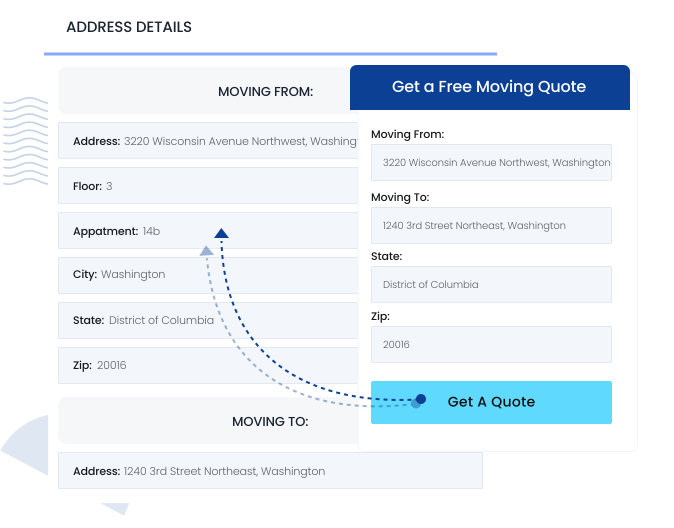
Important details are often missing. Customers may not include the size of their inventory, packing needs, elevator access, specialty items, or building restrictions. Each missing detail slows the process because your team must gather that information before preparing a quote. Many of the systems behind AI estimating tools for movers try to solve this by collecting structured move details during the inquiry stage so the estimate can be prepared faster.
Inconsistent pricing
Manual estimating can also create pricing inconsistencies inside the office. When different staff members prepare quotes, they may apply pricing rules in slightly different ways. One estimator may include certain cost factors while another may overlook them, which can lead to underpriced jobs or inaccurate quotes.
Calculation mistakes are also more likely when estimates are prepared manually, especially during busy periods. These inconsistencies affect profitability and can also create confusion for customers when prices vary between similar moves. In situations like this, AI estimates help standardize calculations by applying the same pricing logic to every inquiry. Many moving companies, however, already address this challenge by setting clear pricing rules inside their estimating systems.
Slow follow-up causes lost leads
Estimating delays do not only slow down office work. They can also cost you potential jobs. Many customers request quotes from several moving companies at the same time and expect a quick response.
Contacting a lead within five minutes makes companies 21 times more likely to qualify that lead compared to waiting 30 minutes. If your company replies too slowly, the customer may already move forward with another mover. This is one reason AI moving estimates are often designed to respond quickly to new inquiries.
How many movers solve these challenges today
Many moving companies address estimating delays by improving how their offices handle inquiries and job information. Instead of relying only on new tools, they focus on organizing their internal workflow so estimates can be prepared faster and more consistently. A structured estimating process often includes several key steps:
- Capturing inquiries immediately and storing all lead details in one place
- Using systems that help you capture leads from different sources such as website forms, phone calls, and online requests
- Requesting missing inventory details early so the estimate can be prepared without delays
- Applying consistent pricing rules across every estimate
- Keeping job information organized so the office can respond quickly to customers
When these processes are structured clearly, office staff can prepare estimates faster and maintain consistent pricing across every move.
AI still requires human oversight
AI can speed up many parts of the estimating process, but experience still matters when preparing accurate quotes. Every move has details that AI cannot fully interpret without human review.
Some jobs involve difficult access, fragile items, complex logistics, or unusual customer requests. These factors often require a closer look before final pricing is confirmed.
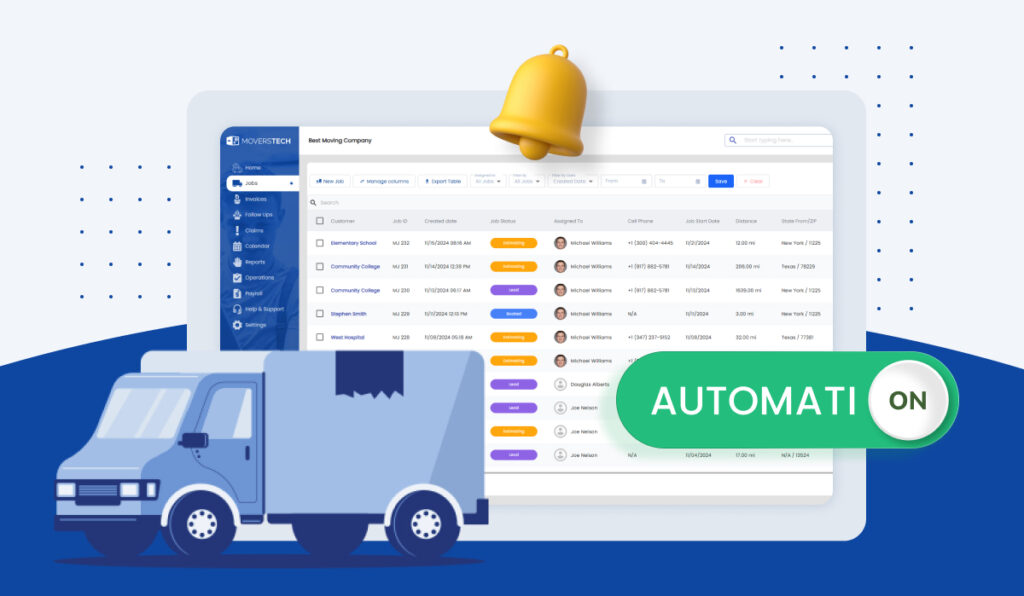
Organized lead capture, structured job details, and consistent pricing rules are not new ideas. In fact, these things are a part of the essential automation blueprint for movers. When these processes are in place, technology simply helps the office run more smoothly.
The future of moving estimates
Estimating technology will continue to evolve as moving companies look for ways to respond faster and reduce manual work. Tools built for AI moving quotes are becoming more visible as companies test new ways to generate estimates and collect inventory details.
At the same time, the fundamentals of estimating remain the same. Accurate quotes still depend on several core elements:
- Clear and complete customer information
- Consistent pricing rules across the office
- Organized lead and inquiry management
Technology can support these processes, but it does not replace operational structure. Moving companies that keep their workflows organized usually respond faster and maintain more consistent estimates across every job.
Process matters more than technology
The growing interest in AI estimates reflects a larger goal across the moving industry. Every company wants estimates to be faster, clearer, and easier to manage. Technology will continue to evolve, and new tools will continue to appear. However, the biggest improvements usually come from organized processes inside the office. When you capture leads quickly, keep job details structured, apply consistent pricing rules, and follow up without delays, estimating is much easier to manage. Many of these improvements are now connected to AI and automation, but the real advantage still comes from having a clear and organized workflow.
Frequently Asked Questions
How do AI estimates compare to manual estimating?

AI estimates respond faster and apply consistent pricing, while manual estimating takes longer and often leads to variations between quotes. Well-built automation can achieve same speed and consistency without relying on AI.
Can AI estimates eliminate delays completely?
No. AI speeds up the process, but delays still happen if customer information is incomplete or workflows are not organized. Strong automation and structured processes are what actually reduce delays.
What matters more, AI tools or internal processes?
Processes matter more. AI can improve speed, but well-designed automation, structured lead capture, and consistent pricing rules are what ensure accurate, reliable estimates.
