
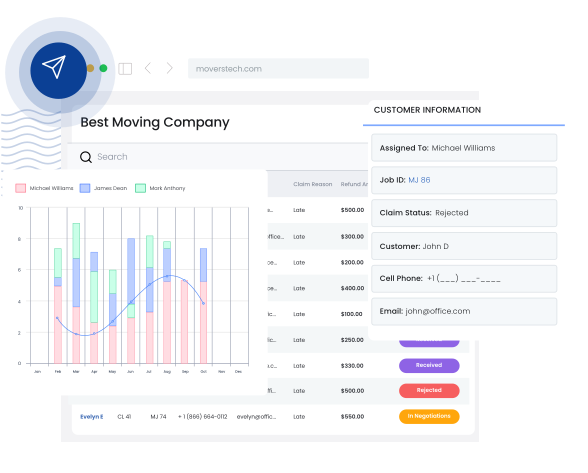
Moves often succeed while claims fail because details fade after delivery. When conversations, documents, and photos lose context, disputes grow. Clear timing, connected records, and documentation captured during the move prevent confusion long after the truck leaves.
Moves often end with a handshake, but the trouble starts later. On delivery day, most moves feel finished. The truck is empty. The crew leaves. Paperwork gets signed and everyone moves on. Then weeks pass, boxes get opened, and an email lands in your inbox. That moment is when you see why the move went fine but the claim didn’t. Claims rarely fail because of what happened on move day. They fail because details fade, files scatter, and people involved are no longer available. This gap puts office teams in a tough spot. Systems like MoversTech CRM exist to close that gap by keeping job details clear long after the truck is gone.
Top reasons why the move went fine, but the claim didn’t
In most cases, the move itself goes smoothly. The problems start later. Claims usually break down after delivery, not because of one big mistake, but because small gaps add up over time. Usually, the move goes fine,e but the claim doesn’t because:
- Problems surface weeks after the move, not on move day
- No one remembers the job clearly after delivery
- Important details are explained,d but not properly recorded
- Customers recall conversations, not signed documents
- Documents exist, but they do not show the full picture
Problems surface weeks after the move, not on move day
On move day, everything appears to be in order. The crew completes the work, the customer signs the paperwork, and the truck leaves for the next job. From the office perspective, there are no warning signs. Dispatch closes the file, and the move is treated as finished.

Problems usually surface later. Days or weeks pass, the customer begins unpacking, and an issue comes to light. By then, the crew no longer remembers the details, and the estimator or coordinator involved may not be available. What felt smooth at delivery starts to feel uncertain, which is often why the move went fine, but the claim didn’t.
No one remembers the job clearly after delivery
Most claims fall apart because memory fades. Dispatchers rotate shifts, office staff change day to day, and crews complete several jobs each week. As time passes, no one clearly recalls one specific move.
At the same time, the details that matter most during a claim often live in conversations. What was explained, what was acknowledged, and what an item looked like before loading are easy to forget. When this information is not captured in the moment, it disappears. Claims are not disputed because people lie. They are disputed because no one remembers with certainty.
Important details are explained, but not properly recorded
Most claim problems come from small gaps that feel harmless at first. A valuation option gets explained out loud, but the signed page is not tied to the job. Inventory photos exist, but they sit on a mover’s phone. Paperwork is scanned later with no clear timing. Notes get added after the move instead of during it.
This is where the real customer claims meaning is much clearer. A claim is not just a form. It is proof of what was agreed to, when it was agreed to, and how the move looked at that moment. That is why offices end up saying, “We know they chose released value, but where is the signed page?”

Customers recall conversations, not signed documents
Most customers are not trying to argue. They remember the move based on how it felt. Moving days are stressful, so attention stays on timing, access, and getting settled. Documents get signed, but they are rarely reviewed again.
Weeks after delivery, what stays in their mind is a conversation, not a form. Without clear proof tied to the job, their version feels accurate to them. Disputes grow not because of bad intent, but because memory fills the gaps when records do not.
Documents exist, but they do not show the full picture
Many offices feel protected because the paperwork exists. There is a signed form, a bill of lading sent by email, and a PDF saved in a folder. However, when a claim comes in, those documents often fail to answer the real questions.
Proof depends on context and timing. A valuation form carries weight when it clearly shows when it was accepted. Photos matter when they are tied to specific inventory items. A clear sequence of events removes doubt and reduces debate. When files are scattered across different places, their value weakens, which is another reason why the move went fine but the claim didn’t.
How technology quietly prevents claims from escalating
Good systems work in the background. They do not change how crews move furniture. They change how information stays connected after the move. Digital valuation forms stay tied to the job. E-signatures are captured at the right moment, not days later. Photos are uploaded directly into the system instead of living on personal phones.
To avoid this kind of breakdown, you can use claims management software and keep the full story in one place. It shows sequence, not just documents. When everything stays connected, the office does not need to rebuild the move from memory. The file already explains what happened.

What happens when a claim file tells the whole story
When a claim comes in, and the file is complete, the difference shows right away. Instead of searching through emails or relying on memory, the office opens the job record and sees how the move unfolded from start to finish.
The signed valuation shows when coverage was accepted. Inventory photos confirm item condition before loading. Notes entered during the move explain what was discussed while details were still fresh. The bill of lading signed after delivery closes the timeline and ties everything together.
Household goods claims depend on clear documentation, including valuations, inventories, and bills of lading, as outlined in FMCSA guidance. With everything in one place, most questions get answered in a single review, and the claim stays calm and contained.
Why does this matter more as moving companies grow
As volume increases, memory drops. When more jobs run each week, fewer details stay tied to each move. At the same time, teams expand. Sales, dispatch, crews, and office staff handle the same job at different points, and each handoff adds risk.
What once worked at a small scale starts to break under pressure. Small gaps that felt manageable begin to repeat across jobs. Over time, growth exposes why the move went fine, but the claim didn’t. Without systems that carry details forward, claims increase as the business continues to expand.
Preventing disputes is about timing, not more paperwork
Many offices respond to claims by adding more forms, but that approach rarely solves the problem. The real improvement comes from capturing the right details at the right moment. Valuation acceptance carries the most weight before loading begins, photos matter most before items enter the truck, and notes are far more useful when written during the move rather than after it ends.
When systems collect information while the job is still in progress, disputes tend to fade later. Clear timing removes doubt early and prevents small questions from turning into larger issues.
Document the move and avoid claims confusion
Most long claim disputes start as small issues. The move itself usually goes as planned. The trouble begins later, when details fade, and records lose context. That pattern shows up again and again in moving company complaints, where the delivery felt smooth but the follow-up did not. This is why the move went fin,e but the claim didn’t. The deciding factor is rarely the valuation type. It is clarity. When your team can clearly show what was agreed to, when it happened, and who acknowledged it, claims stay short and controlled. Systems that support memory reduce friction before it grows.
Frequently Asked Questions
Why do moving claims appear weeks after delivery?

Most issues surface during unpacking, not on move day. By that time, memories fade and small details that matter during claims are harder to verify.
Why do customers and movers remember the same move differently?
Customers remember conversations and feelings, while companies rely on documents. When records lack context or timing, memory fills the gaps on both sides.
What information matters most during a moving claim review?
Clear valuation acceptance, inventory condition before loading, delivery confirmation, and notes recorded while the move is happening carry the most weight.
Why do claims increase as moving companies grow?
Higher job volume and larger teams reduce personal recall. Without consistent documentation across jobs, small gaps repeat and turn into more frequent disputes.
