

Accessorial charges are fees for services beyond basic transportation, such as stairs, long carries, shuttles, packing, and storage. When movers fail to identify and bill these charges consistently, they lose revenue, reduce profit margins, and create avoidable pricing and compliance issues.
Accessorial charges are fees for services beyond the basic transportation of a shipment. These include situations such as carrying items a long distance from the truck, climbing stairs, using a shuttle vehicle, handling bulky items, or providing temporary storage. Under federal regulations, accessorial services are requested by the customer or become necessary because of conditions at the origin or destination. These charges apply in addition to the line-haul transportation rate.
For moving companies, accessorials represent legitimate billable work. However, they only generate revenue when they are included in the mover’s tariff, identified during the estimate process, and applied consistently. Missed accessorial charges are one of the most common sources of lost profit in the moving industry.
What “Accessorial” actually means
An accessorial charge is any fee that covers services beyond the basic transportation of household goods.
The transportation portion of a move is known as the line-haul charge. This is the cost associated with moving goods from one location to another. Accessorial charges cover additional labor, equipment, time, or resources required to complete the move.
Examples include carrying items up flights of stairs, transporting goods from a distant parking location, storing shipments temporarily, or using a shuttle vehicle because a tractor-trailer cannot access the residence.
The key point is that these services create real costs for the mover. Additional labor hours, equipment use, fuel consumption, and scheduling complexity all affect profitability. When accessorial charges are overlooked or intentionally absorbed, movers are effectively performing additional work without compensation.
Common accessorial charges explained
Most moving companies encounter the same accessorial charges repeatedly. Understanding these charges helps estimators identify them early and helps customers understand what they are paying for.
Long carry
A long carry applies when movers must transport items an excessive distance between the truck and the residence. Large apartment complexes and urban locations commonly trigger this charge.
Stair and flight carry
Moving furniture and boxes up multiple flights of stairs requires additional labor and time. Many tariffs define stair carry charges based on the number of flights involved.
Shuttle service
When local regulations, narrow streets, low bridges, or parking restrictions prevent a large moving truck from reaching the residence, movers may need to use a smaller shuttle vehicle.
Bulky articles
Items such as pianos, hot tubs, pool tables, and large safes often require additional equipment, manpower, and expertise.
It is also important to distinguish accessorial charges from impracticable operations. Accessorials are generally known and identified during the estimate process, while impracticable operations arise from unexpected conditions covered by the mover’s tariff.
Why movers misprice or miss accessorials
Most missed accessorial revenue does not come from bad intentions. It comes from inconsistent processes.
An estimator may fail to ask about stairs at the destination. A salesperson may provide a quick quote without confirming truck access. A customer may not mention a long carry situation because they do not realize it matters.
Sometimes the issue is even simpler. The service is not listed in the company’s tariff, making it difficult or impossible to bill properly.
In other cases, one estimator applies a stair charge while another does not. One crew documents a shuttle requirement while another absorbs the cost.
These small inconsistencies add up over time. Every missed accessorial means additional labor, equipment use, or scheduling complexity that is not reflected in the final invoice.
For many moving companies, accessorial leakage becomes one of the largest hidden sources of margin loss.
The compliance angle most movers miss
Accessorial charges are not just an operational issue. They are also a compliance issue.
Federal regulations require movers to identify applicable accessorial charges before preparing the order for service and the Bill of Lading. This means movers should determine whether stairs, shuttles, storage, bulky articles, or other services apply during the survey process.
If those services are not identified properly, collecting payment later becomes much more difficult.
This is especially important when working with non-binding estimates. Federal rules limit how much a mover can collect at delivery, and certain additional charges may not be immediately collectible if they were not properly disclosed beforehand.
Another common misconception involves verbal quotes. A verbal quote is not an official estimate. The written estimate remains the document that establishes the expected charges and services.
The lesson is simple: accessorials should be identified during the survey, included in the estimate, and documented before move day.
How to capture accessorials properly
The problem with accessorial charges is rarely that movers don’t understand them. The problem is that capturing them often depends on memory, and memory fails under pressure.
An estimator forgets to ask about stairs. A salesperson quotes a flat rate and absorbs the long carry to close the deal. A shuttle requirement comes up during a call, but never makes it onto the estimate. By move day, the crew is performing billable work that nobody priced, and there is no clean way to add those charges afterward.
The solution is not working harder. The solution is building a process that prompts for every accessorial at the right time and carries it through the entire move.

Start by making sure every accessorial service your company offers is included in your tariff. If a charge is not listed in your tariff, you may not be able to bill for it. Next, create a standard survey checklist that every estimator follows:
- Are there stairs?
- Is elevator access required?
- Is a shuttle likely?
- Is there a long carry?
- Are there bulky or specialty items?
- Will storage-in-transit be needed?
Every estimate should follow the same process.
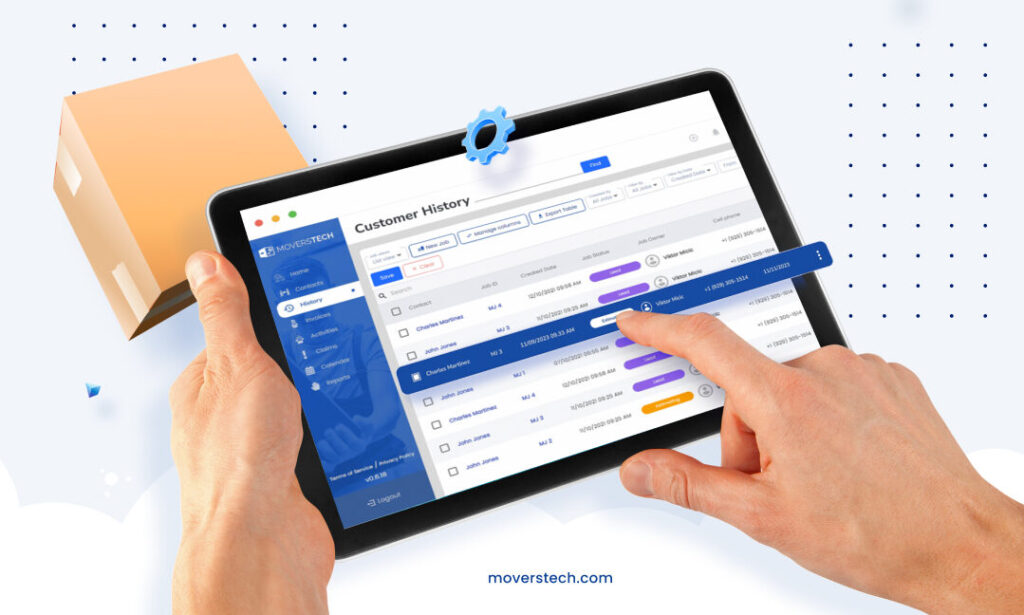
This is where the right moving CRM does the heavy lifting. With MoversTech, accessorial charges such as long carries, stair carries, shuttle service, bulky articles, packing, and storage-in-transit can be built directly into estimate templates, ensuring they are reviewed during the survey instead of being remembered later.
Once an accessorial is added to the estimate, it automatically carries through to the quote, dispatch paperwork, crew job sheet, and final invoice. Everyone works from the same information, reducing surprises, disputes, and missed charges. When tariff rates change, they can be updated in one place so every new estimate reflects the current pricing.
The result is fewer revenue leaks, more consistent pricing across your team, and a clear record of what was quoted versus what was performed. Accessorial charges stop being a hidden margin drain and become a controlled, billable part of every move.
Stop giving away billable work
Accessorial charges exist because some moves require more labor, equipment, time, and complexity than others. They are not hidden fees. They are compensation for real work performed.
The challenge for many movers is not understanding accessorials. It is capturing them consistently.
Companies that build accessorial identification into their survey process, tariff structure, and estimating workflow are far less likely to leave revenue on the table.
If you’re reviewing your pricing process, start by asking a simple question: How many accessorial charges did your crews perform last month that never made it onto an invoice?
Want greater consistency between surveys, estimates, and invoices? Book a Demo to see how moving software can help standardize accessorial charge management across your operation.
Frequently Asked Questions
What is an accessorial charge in moving?

An accessorial charge is a fee for services beyond basic transportation. Common examples include stair carries, long carries, packing services, shuttle services, and temporary storage.
What's the difference between line-haul and accessorial charges?
Line-haul charges cover the transportation of goods between locations. Accessorial charges cover additional services required to complete the move.
How can a CRM help reduce missed accessorial charges?
A CRM can prompt estimators to review common accessorials such as stairs, long carries, shuttle service, and bulky items during the survey process. This helps ensure billable services are identified before the move begins.
Why should accessorial charges be built into estimate templates?
When accessorials are included in estimate templates, every estimator follows the same process and pricing structure. This reduces inconsistencies and helps prevent revenue from being overlooked.
Can a CRM automatically carry accessorial charges from the estimate to the invoice?
Yes. Many moving CRMs can transfer approved accessorial charges from the estimate to the quote, dispatch paperwork, job record, and invoice. This reduces manual entry and helps ensure charges are not lost during the move lifecycle.
